Child marriage robs girls of their childhood, education, and future. It leads to early pregnancy, health risks, school dropout, and lifelong economic dependence. In tribal and marginalised communities across Betul and Chhindwara districts, deeply entrenched social norms and poverty continue to drive this practice.
Pradeepan, in partnership with the Kailash Satyarthi Children's Foundation (KSCF), has been running a sustained campaign across 300 villages to end child marriage — not through legal enforcement alone, but through deep community engagement, awareness, and collective commitment.
Key Achievements
Our Campaigns
Bal Vivah se Azadi (August 1–15, 2023)
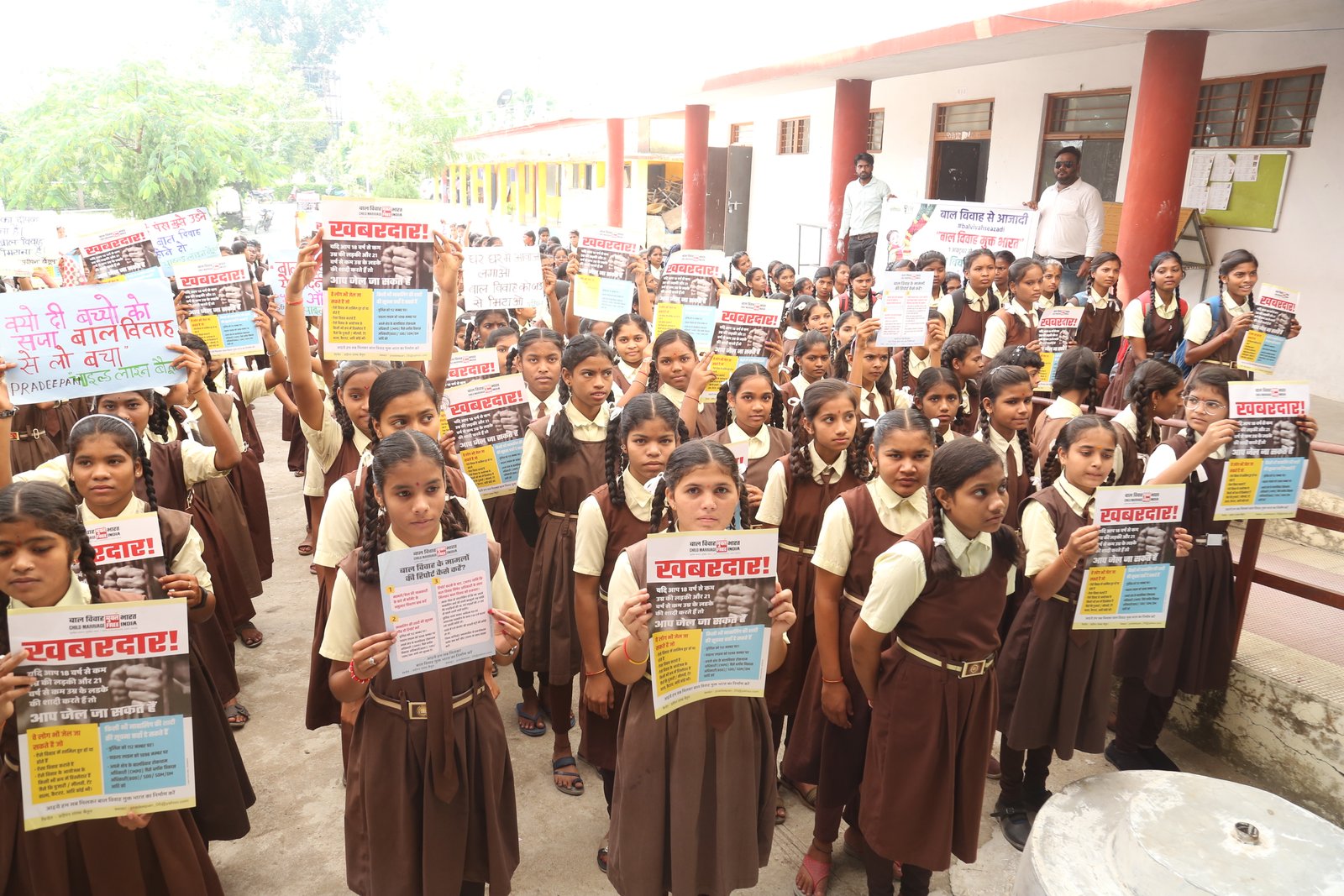
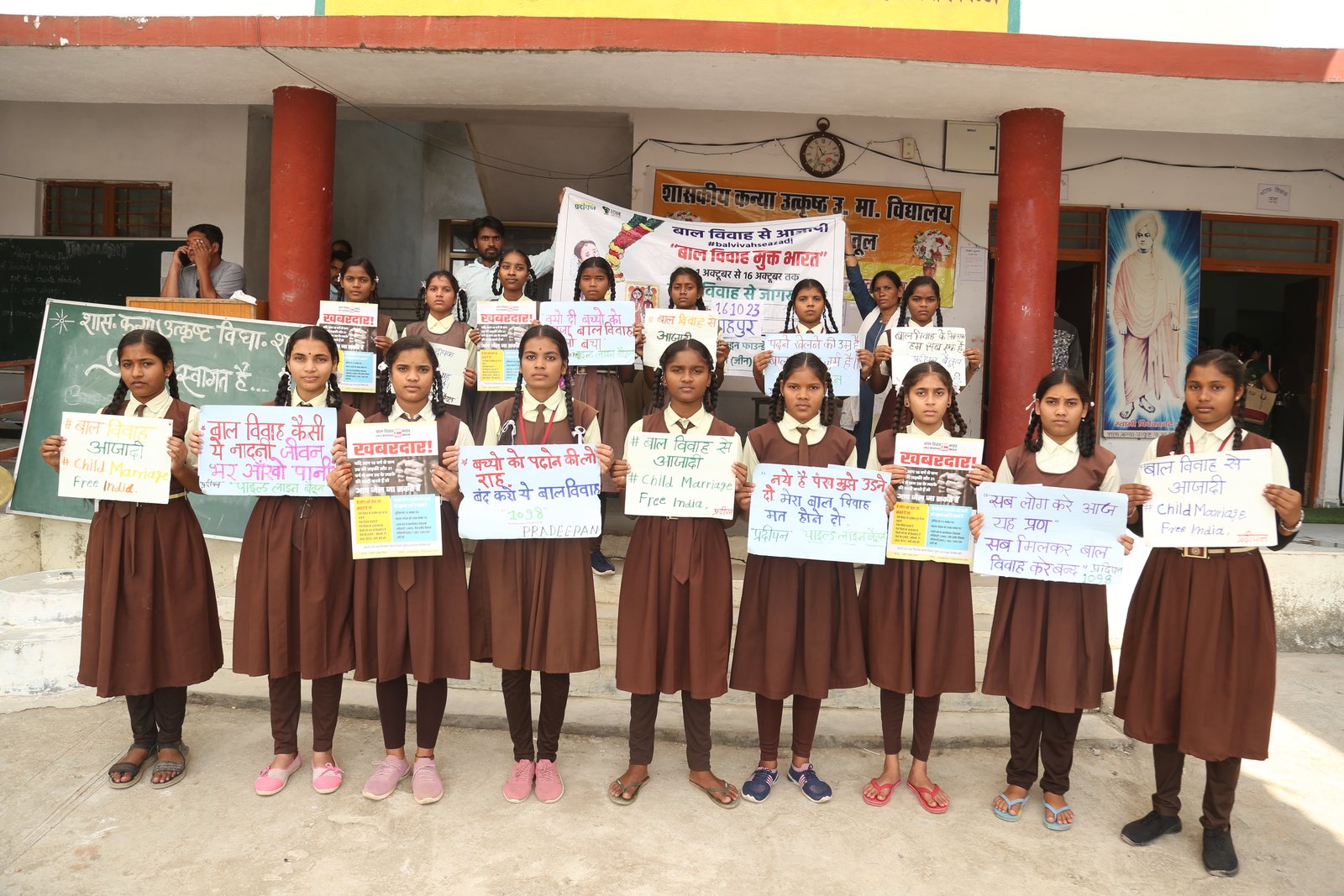
A 15-day intensive campaign conducted across 35 schools and 150 villages in Betul and Chhindwara coinciding with India's Independence Day fortnight. The campaign used school assemblies, village meetings, wall paintings, and door-to-door outreach to collect community pledges against child marriage. Religious leaders, teachers, ASHA workers, and Anganwadi workers were mobilised as community champions.
Child Marriage Free India (October 1–16, 2023)
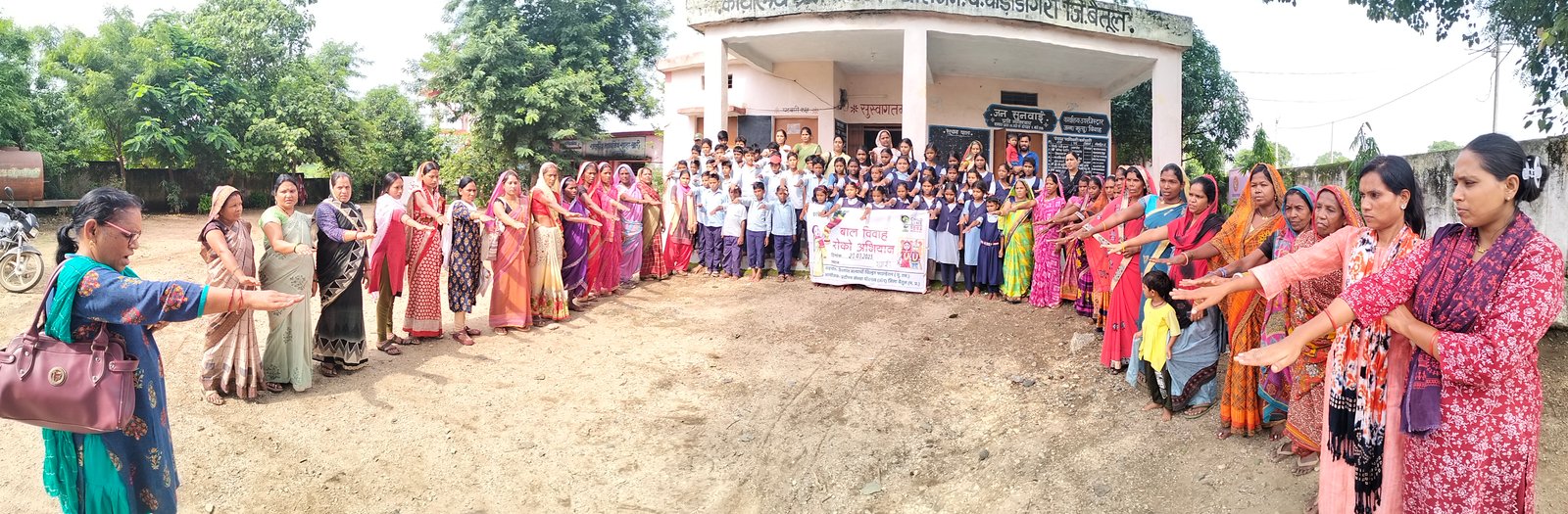
A 16-day awareness campaign covering all 300 programme villages. Village-level oath-taking ceremonies brought together community members, elected representatives, and government officials in a public commitment to preventing child marriage. 85 Gram Panchayats formally resolved to become child marriage-free zones, and the resolutions were recorded in official Gram Sabha minutes.
Continuous Field Monitoring (May 2023 – April 2024)
Pradeepan's field teams maintain ongoing vigilance through a network of Community Vigilance Committees in each programme village. When a potential child marriage is identified, the team coordinates with parents, community leaders, and — where necessary — government authorities to prevent it. In this period, 533 child marriages were successfully stopped and the affected girls were supported to continue their education.
How We Work
Community Awareness & Pledge Drives
Door-to-door engagement, community oaths, and mass awareness activities educate families about the legal, health, and educational consequences of child marriage. We reach families before a marriage is planned — not after.
Gram Sabha Resolutions
We work with elected Gram Panchayat representatives to pass formal resolutions declaring their Panchayat child-marriage-free. These resolutions carry community authority and create peer accountability across villages.
Engagement of Key Influencers
Religious leaders, teachers, Anganwadi workers, ASHA workers, and respected community elders are engaged as local champions. Their voice carries more weight with families than any external intervention.
Girls' Education & Empowerment
Children saved from early marriage are supported to return to school or continue education. Child Protection Committees and Child Clubs in each village monitor school attendance and identify at-risk girls early.
Legal Action When Necessary
Where community intervention fails, Pradeepan coordinates with the Child Marriage Prohibition Officer, police, and District Child Protection Unit (DCPU) to take legal action under the Prohibition of Child Marriage Act, 2006.
The Impact on Girls
Child marriage is not just a social issue — it is a violation of human rights. A girl married before 18:
- Is 6 times more likely to drop out of school
- Faces early pregnancy, increasing maternal and infant mortality risks
- Becomes economically dependent, with limited access to livelihoods
- Is at higher risk of domestic violence and abuse
- Loses access to legal protection and justice systems
Every child marriage prevented is a future protected. Pradeepan's work ensures that girls in the most marginalised communities of Madhya Pradesh can grow up with dignity, education, and choice.
Sustainable Development Goals Alignment
Child Marriage Free India Photo Gallery